
| Home |

Read about our cycling trip around Australia in our book - "Ants, Dust & Flies in my Coffee..."
Or
Triking Alaska's
Dalton Highway
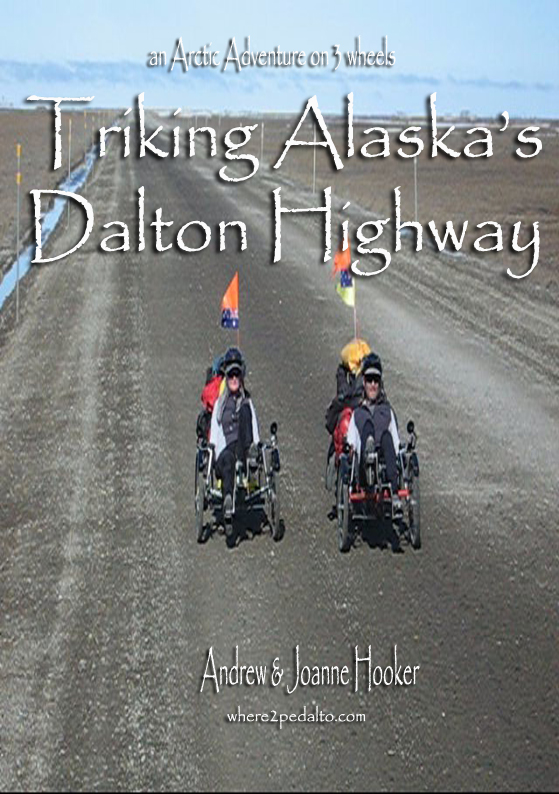
Our Latest Book in
E-Book Format
Size - 27Mgb
(requires Adobe Acrobat Reader)
July 2018
01 July 2018
We started the month of July with rain on the roof. Rain fell during the night and we thought that we would be enjoying the camp at Bollon for another day to let it dry out. Being on the dirt we thought that many other campers would do the same, but no, they packed up and headed off leaving barely a wheel track behind.
So after breakfast we packed up, left a donation in the tin and left as the grey rain clouds built up again. Out on the main road we were heading to clearer skies, something that cheered our mood. The bonus of the overnight rain however was how clean the rig was, until the puddles left on the road changed it back again.
Passing along a road that was barely wide enough for two vehicles to pass made life interesting at times which was just as well because the scenery was not that exciting. Very similar to that around Cobar and Lightning Ridge with a few gum trees around to break the acacia up. Kangaroo's, Emu, Goats, Cattle, and road kill being cleaned up by a giant Wedgetailed Eagle the only other life around.
Pulling into Cunnamulla we decided to stop at a Cabin and Caravan Park to see how good their non powered bush camp ($10) was. Splashing out on an ensuite for another $10 meant we had gravel to park on next to the ensuite as the clouds gathered once more and light rain fell. No water or power was okay and the solar panels on our roof were keeping the battery full.
02 July 2018
The morning was cold but the sun a delight to be standing in. Leaving our camp we stopped in town for some fuel and the odd grocery before heading out of town and along the road towards Eulo, Thargaminda and Innamincka.
Passing through some very dry country we were laughing as we listened the drivers to some four wheel drives that had overtaken us discussing how the place was looking and wondering what cattle would be eating out here in the bush. One of them had obviously been through here before and was a wealth of information which was being soaked up by the other two. He didn't break the truth but he did stretch it a little at times.
Before long we stopped for lunch, fuel and some water at the small town of Thargaminda. Lunch was down at the weir and it was a pleasant stop at that.
Leaving town we were passing through more and more dry, barren countryside. We contemplated taking the 10km's off the track to go and camp at the waterhole opposite the Noccundra Hotel, but in the end opted for a climb up the hill to a large rest area at the turnoff to Innamincka.
Pulling in and setting up camp we were one of two camped there, that is until a little later when some others came in and went down the back, making a party of seven for the night.
03 July 2018
A cool night was kept at bay by our beautifully warm wool under sheet and doona and we awoke to clear skies as the sun began to warm the place up.
We were the first to leave and got the drone up to give it some practice following us, and to video some of the countryside we were passing through. With Joanne driving it was a good opportunity for me to monitor the flight and to try a few things to see if they would happen, and exactly what would happen.
Single lane bitumen road was order of the day as we dropped down the small escarpment and onto the flat. Gas and oil wells, and processing plants of the Jackson oil fields went by as we made our way along through the stony desert country. Station names such as St Anne's Cottage came and went as we made our way along.
Crossing the 14km's of Cooper Creek catchment and tributaries we and on some more. Traffic was fairly light though we had a truck rush hour as we came past a large oil processing plant which made us pull over and just let it all go. We remembered a 10 km spot of sandy road and it was not long before we arrived at it, and we found it just like the last time we went through, bumpy, corrugated and speed sapping and we enjoyed getting back on the black stuff afterwards.

Nodding Donkey Oil Well

Santos Oil Processing Plant
Morning tea was taken after about 150km's and next to a very dry dam. The drone went up again and investigated some orange sand dunes nearby and after about an hour we were on our way again.

Morning tea stop at a dry dam
Less and less greenery and more and more red dirt and brown rocky ground was seen as we edged our way towards Innamincka. Passing the turn off to the Burke and Will Dig Tree at the Arrabury Road turnoff we had some 50 km's to go. We discussed camping at the Dig Tree again but decided that we would camp on the Cooper Creek at Innamincka instead.
Crossing the bridge that spans the Cooper not far from the SA Border we enjoyed seeing a good level of water in it which bode well for the camp tonight.

The bridge over the Cooper Creek (looking East)
Leaving the bitumen just short of the SA Border it was not long before we were in amongst the ruts and chaos that had obviously been created when the last rains and the trucks came through. Slow speed and following the best track often saw us on the opposite side of the road.
Not far from the turnoff to Burkes Grave site on the Cooper the road improved. The road to Burkes Grave was closed so there was no going there today. Climbing the hill we had the drone up again to follow us through the barren countryside as we covered the last few kilometres into Innamincka.

Innamincka
Fuel was $1.80 a litre and there was a real buzz around the roadhouse with all the 4wd's coming in for fuel and supplies. The National Parks office was also doing a good trade with people paying to camp down on the Cooper.
Video can be seen here - https://youtu.be/n7c1TdlPSpY
Checking the road status for the trip up through the National Park to Cordillo and the Windorah to Birdsville Road was meat with disappointment as it is closed. That meant a 50 odd kilometre backtrack to the Dig Tree turnoff to take the road North to Arrabury so as to join the original track past Cordillo Station.
We parked up for lunch on the town common where we had camped the last time we were here. With only an Optus phone tower to cover town we were unable to use the phone to check things and so resorted to paying $5 for 100mb of Internet to check a few things and to let people know where we were. Joanne also bought a phone card to call some people from the phone booth outside the public toilets and showers.
Noticing that the National Park camp was quite busy we took a drive down to the Cooper itself to view the water level, which the last time we were here had cut the road off. This time however it was quite low and we were able to walk across the causeway.
We decided that we would still camp near the Cooper, but not in Innamincka, and so made our way back out of town to the bridge over the Cooper some 40 km's out of town. Heading back out of town and up the hill we back tracked over the crappy road and back into Qld again, eventually stopping on the gravel some 290 km's after we started this morning, next to what must have been a road work camp just over the bridge.
04 July 2018
It was so quiet last night it was noisy, and the stars overhead were certainly putting on a show. Another cool morning saw a nice orange sunrise.
Setting off we easily covered the short distance to the Arrabury road turnoff and with the St Anne Range ahead of us we made our way along the good, but rocky road. Climbing the range we topped out at 200m above where we started and then with the climb behind us we were on the open, treeless plateau and making good time.

The St Anne's Range.
Just as we were getting used to the brown rocky road we came into sand dune country. The road turned to red sand and the ride became smoother. We put the drone up for some footage which was quite challenging with the strength of the wind. It was here that we also noticed that we had a flat tyre. Pulling over we changed the tyre and continued on our way.

Sand dunes to the left and right as the road followed the swale.
More sand dune country continued as made our way to the station at Arrabury, and then, as we crossed dry riverbed and turned North West, the country changed and we were back into the rocky road country again. The sand dunes had plenty of vegetation around them and all of the disappeared into the mirror as vegetation was replaced with rocks and open ground.

Having crossed the border we had to stop for a photo.
Arriving at a gate we stopped to open it and pass through into Cordillo Station. Arriving at the station house itself we were here to visit what was Australia's largest woolshed. A stone and concrete structure with a tin roof, the whole thing is falling down now and used to store various bits of the station's odds and sods.

The Cordillo Downs Woolshed.
With 120 stands by 1880 the place sure would have been busy especially as they recorded shearing 82,000 sheep one season, and that's with hand shears! Later in 1907, 42 men toiled over 36,000 sheep and finished them off in three weeks, though they had mechanical shears. Wool was put into huge piles and then baled later to be carted off by camel or donkey trains ready to be shipped to England. A wool scour was also installed and wool from Innamincka and beyond was also brought up to be cleaned before being sent to England. All shearing at Cordillo ceased in 1888.

Inside the woolshed. Imagine 120 stands in here with shearer's, wool, sheep and roustabouts.
Just as we had finished our look around we were joined by four other cars and campers, and then, another dozen came in in a large convoy, easily seen by their dust trails as they came along the ridge.
We ate lunch and then headed off before the rest of them. Covering the 80 km's to the Cadelga ruins we were passing through more open country, climbing ridges and dropping back down to dry creek beds and past some waterhole's. Out into open channel country the road became smoother as we made our way along on the light grey soil that if it were wet, would have bogged us for days.
Some large sand dunes came into view and as we got closer we could really see how high they were. Pulling over it was the perfect opportunity to send the drone up again and to get some shots of one dune as it sat in the middle of nowhere all by itself about half a kilometre from the road. Getting there was a bit of a struggle against the wind but coming back was easy. The drone telemetry also telling us it was 22m high at the peak as we hovered to get some other photo's.

The large dune by itself.
Arriving at the creek we crossed the dry crossing but noticed water on either side. Pulling off the track and into the driveway we could see the ruins ahead of us. We selected a camp spot on the bank of the creek and settled in. The first job being the location of the air leak in the tyre and then fixing it, and then the flies found us! Thousands of little black flies were everywhere, tickling us as they relished in being able to get onto any exposed skin, though thankfully not on our faces because of the fly nets.

Cadelga Creek and Ruins.

A different view of the ruins.
Being around 26 degrees C we changed into lighter clothing and then with a fly net over the hat, located a small hole in the tyre, plugged it and reinflated the tyre to see if we had fixed it, and it appeared we had, though we decided to leave it off the vehicle until the morning just in case.
Not long after we had set up a convoy of four wheel drives and camper trailers came in for a look and a quick break before they continue on their quest to get to Birdsville today. Later on two others came in and so it was just the three of us spread along the bank of the waterhole.

Another sunset for this old car and the ruins.

The belt of Venus settles in the sky over the ruins as the sun sets in the opposite direction.
The old wire covered chook shed has faired better than the homestead.
Video can be seen here - https://youtu.be/zy5QjYAA0OU
05 July 2018
Once again the silence of the outback was deafening and despite the warm day the night was fairly cool, and we awoke to a beautiful day.
With 30 odd kilometres to the Windora-Birdsville Rd and then a planned 100 km round trip track East to visit the pub at Betoota and another 100km's to Birdsville we topped up the tank with one of our jerry cans and then, as the tyre we fixed yesterday was still inflated, we swapped it back over and headed off down the track.
Back out in the open gibber plain desert we had some fun with the drone before we arrived at our turnoff. It seemed funny to be heading away from Birdsville and the traffic going there was quite intense. Approaching plumes of dust could be seen off in the distance before they were upon us.
The track was in very good condition and we were skipping along nicely at 80 km/h. About 8km's from Betoota We stopped for a look at the dreamtime serpent that had been made out of local gibber rocks on a large outcrop.

Dust plumes from people heading to Birdsville as the Dreamtime Serpent looks on.
Turning off to what was once a town, we soon arrived at the only building in town, the pub. Once a Customs House for taxing the drovers with their cattle, it became a pub after it closed in 1901. Made from SA sandstone blocks it is a sturdy building and is currently under renovation.
Joanne saw the story of it somewhere and so it was on the list of places to visit. The pub closed in 1997 and after the previous owner died (he is buried in the back yard), he left the building to his mates but stipulated it was not to be reopened as a pub by them. Well, the current owner had had his eye on the old pub for some time and eventually managed to buy it from the mates, and he is now renovating it ready for opening on the 18th of August.

Stopping for a look at the Betoota Hotel.
On arrival we were met by the K9 welcoming committee who all looked like they were welcoming a new set of wheels to water, but having been told not to, they did as they were told and just lay down in the vehicle's shade.

The welcoming committee.
We were also met by a bloke who is there fixing the electrics, including the original 32v system, and he showed us through the building and told us the story of it. Eventually there will be a caravan park and other accommodation, fuel and of course meals and drinks available.
Leaving Betoota we made our way back towards Birdsville, and after stopping for lunch and to drop the other jerry can of fuel into the tank eventually arrived on the outskirts of Birdsville, passing the famous racecourse, crossing the Diamantina River, past the hundreds and hundreds of caravans, campertrailers, motorhome's, tents, swags and anything else you can think of that were parked just outside the town limits.
Into town we filled up with fuel ($1.72 c/litre) then made our way out to the bronco yards to top up the water tanks. The plan then was to go back out to the river and camp, but in the end we found a spot out the back of the camping city a few hundred metres away from the creek, and settled in.
05 July 2018
For so many people camped together you could have heard a pin drop last night, and we all awoke to a very windy day. Some campers moved on and some out to the Big Red Bash site which opened today.
Joanne walked into town and after a walk around, a chat with locals, a photo or three and a visit to the bakery for fresh bread she came back. We have then spent the day reliving the last few days via photo and video, preparing the website, getting the washing done and whatever else has been needed.
The wind is still blowing quite hard and meaning we would have a headwind if we left, so we are contemplating another day here to let it blow through to save us some fuel. Of course we could stay a little longer and volunteer 8 hours of work to the bash in exchange for free entry, which would be better than paying $375 each!
08 July 2018
Our stay in Birdsville was a pleasant one, and it sure gave us a taste of how a town of 100 handles and feels when it is inundated with an expected 10,000! The campsite was fairly busy and viewing the types of rigs was better than any RV show.

Just one view of the free camp and big red bash attendees which filled up some more more after taking this.
It would have been good to get the drone up but the area is in a no fly zone because of the airport, so taking a small pano from the roof was the only option.
In town it was just wall to wall, bumper to bumper with vehicles. All the businesses were doing a roaring trade and there was one heck of a line up for fuel. The iconic Birdsville pub was surrounded by utes and all manner of vehicles, the airport was almost as busy with helicopters and light planes taking off almost continuously. The main road was covered in wheel mark dust streaks as vehicles left their desert dust behind.
For some reason our gas bottle had emptied, perhaps to a leak somewhere, so taking the empty in for a refill was quite an experience, not only in getting near the roadhouse, but paying for it. Lining up in the roadhouse the shop almost needed traffic control inside and then when the lady rang the till up it was a whopping $68! Oh well, we can't cook without it.
We enjoyed a day off and just relaxed. Joanne taking advantage of the stop to walk into town for a look around, including inside the pub. Then this morning we wondered why we could hear all these people packing up and heading out, even in the dark. Well, today was the day the paying guests get to go out to Big Red and stake a camp claim. No being on a first in best dressed situation, it was no wonder they were up early.

The iconic Birdsville Pub as the sun came up.


Rested overnight and ready for another big day, this is right opposite the pub, with a gate to make it easier.

Once the town's big event, the races are a distance second to the big red bash these days.
We packed up and headed off to the tap to top up and it was there that we heard that the dump point on the way South, the one we wanted to use, needed gum boots to get near it. So, we had no alternative but to follow the crowds through town like we were part of a parade, to the other one. Lining up was easy but stopping the que jumpers was another. People racing along and then at the last minute swerving in near the head of the que as they remembered they needed to empty the dunny before heading out to Big Red.
Having got in and emptied our own toilet we turned around and drove against the tide, passing back through town, past the free camp which was still chockers, crossing the Diamantina River and past the racecourse before we had open road, no traffic and a big sigh of relief.
Making our way along the Birdsville Track we were passing parallel to the dunes along the swales. Climbing the occasional dune and passing more and more rigs heading North to the bash.

Dwarfed by the dunes as we get further and further into the desert.
Just before the SA Border a Police 4wd heading North pulled us over for a breath test and rego check. After passing both and having a chat with the Police we covered the short distance to the border and crossed over.
The state may have changed but the scenery was the same. Leaving the dunes behind we came into more open country and up to some roadwork's where we called up on the radio for instructions and were told to just follow the two graders, so we did. Having the road made in front of you is interesting, but slow.

Our grader escort, making the road as they went.
Passing large puddles of water in the open gibber plain was interesting and proof that there is water in the desert. Stopping for morning tea after the roadwork's we were watching the numerous rigs heading North at a frantic rate, dust and rocks flying everywhere as they went, thankfully away from us.
The road went from reasonable to rocky and it was along here that we all of a sudden heard a large escape of air and the tell tale wobble of a flat tyre after we had gone over a rocky spot. Stopping just off the road we saw that the flat tyre was the same one we had repaired a few days ago. Changing back to the spare tyre we noticed that the plug we had put in the last time had taken a rock had ripped apart, so that was the end of that, the tyre now destined for the rubbish heap.
Following the tyre change we made the 30 odd km's to a small camping area at the Mt Gason Creek, but with the dust from the North bound vehicles blowing over it we found a spot about 50m off the road on the other side, and settled in.
Of course the drone went up for a look around and some photo's and video, and then again later on as the sun began to set.

The sun going down cast a beautifully soft light on the dunes.

And in the other direction almost as good.

Back on the ground the sunset went from good to great!
One other camper came in and set up not far from us, and one other set up in the camp on the opposite side of the road as the traffic slowed from the 160 odd that went past us while we drove and the 80 that went past since we set up camp. With the BRB starting tomorrow we are hoping that the oncoming traffic will be less.
09 July 2018
Leaving our camp in the Tirari Desert we were headed for Munngerannie for fuel and to get the busted tyre sorted out. Not long into the trip we passed Mt Gason, the namesake of the creek and last nights camp, and named after an early Policeman, Samuel Gason who spent much of his time here in the area's early years.
Nearer to the Mirra Mitta Bore (sunk in 1901), we came around a corner could see we had water across the road, and a small inland sea on either side. The water is from the artesian bore up on the hill and of course, being un tapped, it flows down the hill and provides a little oasis in the desert. Up at the bore itself we had just parked up and started to inspect the bore and the flow when the other half of Australia turned up to see what we were looking at. It was camper trailer city!

The water flowing across half of the road and the small inland sea behind it.

Coming out of the ground at 90 degrees C it's too hot to handle here, but further down it would have made a nice bath.
Looking at it now it is hard to believe that the site once used to host an annual picnic and horse race meet, and even had a general store.
Arriving at some low lying hills and escapements we took the chance to get the drone up for a look at the Mungerannie Gap where the Birdsville Track cuts through.

The hills that the Mungerannie Gap skirts to the right of.
Then, a few kilometres on we pulled into the Mungerannie Hotel which sits on the bank of the creek. Plenty of campers had spent the night here and the place was surrounded. It might have had something to do with the sign with the golden arches that read "McDonalds opening here soon".
We pulled up to the bowser and filled the tank up at $1.90 c/litre (ouch), and then took our busted tyre around the back where the hard working tyre fixer took the damaged tyre off the rim and put our spare tyre (that had been enjoying the trip on the back seat) on. A quick stop and then we were on our way.
Spying some ruins on off the road we pulled into the track and followed it to the old Mulka Homestead which was home for 40 years to Alexander Scobie, a Scotsman, his wife Mary and their to be, seven children back in 1885. Alexander and Mary left the property in 1915, leaving it to two of their sons. With two previous children dying of pneumonia and being buried out the back near a tree (the graves are still there today), one of the sons also died, and after Alexander died in 1919, Mary returned to the property and lived there for another five years until she sold it to George Poddy and Mabel Aniston. They ran the place as a store for the drovers supplies. George died in 1943 and Mabel stayed on for another 10 years. Since then the desert has reclaimed its own.

Very little remains of what was a home, and welcome sight for travellers from 1885 onwards.
Passing through the Natterannie Dunes about 23km' North of the Cooper Creek, we couldn't understand why the track was rocky gravel until we realised that it was the area where the road had been built up with clay back in because the rain used to wash the road away and sheets of corrugated iron were left to make the track passable. We also passed the Flood Bypass track that takes you to the Cooper Ferry.
Eventually we came to the Cooper Creek, the road crossing of which goes for a 5 kilometres, hence the need for a flood bypass track and ferry. Pulling into the campground we realised it is actually in part of the creek, so we hope there is no need for that ferry tonight. Today's Northbound vehicle count was over 100 again.
10 July 2018
It was very quiet last night on the Cooper and we awoke to a heavy dew blanketing everything. Moving on we stopped for a look at the MV Tom Brennen, a metal raft that was placed for use by people and stock during a flood.
Leaving the MV raft to continue rusting in its desert home we continued along the track, encountering the various changes in track condition. Passing a station house near the road we identified it as Kilalpaninna which used to be a Lutheran Mission back in 1921.
Further along the track we came upon the Dulkaninna Homestead where the artesian bore was flooding the road and providing us with a water crossing, the first and only one we saw. The water depth just managing to reach the wheel rims as we passed through.

Coming on a large pencil shaped pile of stones just a hundred metres off the road we identified it was the 1858 Surveyors Cairn made from black stones stacked about 10 feet high, but no plaque to actually identify it.
Approaching Lake Harry we arrived at the Dog Proof Fence where we stopped and launched the drone in some strong winds to get an aerial view of the fence and the area.

The Dog Proof fence where the Birdsville Track intersects it near Lake Harry.

The Lake Harry Ruins sit near the lake itself.
Lake Harry Ruins sit on the site of what was the SA Governments attempt to grow 2,000 Date Palms back in 1890, but after 30 years of growth the operators of the venture realised they could pollinate them, and so the project was abandoned. Now there is not a date palm to be seen, the bore there is still flowing, and the building ruins are exactly that, a ruin.

After being passed by around 300 vehicles over the last two days, today was exceptionally quite with only half a dozen. We eventually arrived in Marree where all of a sudden we were back in the tourist traffic with campers, caravans and four wheel drives everywhere.

The end of the Birdsville Track for us, the start for others as they head North.
Want to see some video of the trip? Check here on youtube.
We managed to get fuelled up ($1.90 a litre) before the line up started and stretched for some distance. Fuel done we parked up and got connected on a very slow Internet to check our emails before heading over to the Lake Eyre Yacht Club for some got some information on getting out to Lake Eyre. Unfortunately the Internet was not fast enough to upload the web page.
After lunch we drove out of town, passing the first of the old Ghan Railway bridges before turning off and heading out to Muloorina Station where there is a campsite next to an artesian bore fed waterhole.

The Muloorina Station and Waterhole camp as we look back towards Marree.

Our campsite next to the waterhole.

Birdlife abounds here at this oasis in the desert.
Just as we climbed into bed we opened the roof hatch and immediately saw stars! Not because we hit our head, but because the milky way was up and the gazillions of stars were providing enough light to see by. So it was a case of back out of bed, clothes over the pj's and out into the cold of the night armed with the camera.

And they even reflected nicely in the waterhole.
11 July 2018
Despite the water birds being active all night we enjoyed a peaceful night and awoke to a very cool morning. Joanne went for a walk down to the artesian bore for a look and came back with these photos.

The artesian bore that is the source of the water here.

It's only down here that the water is cool enough to enjoy in this natural bath.
We packed up and were heading out to Lake Eyre but didn't even make it past the campground. Noticing the sign that said "No caravans or trailers past this point" as the start of the track out. We decided that we had better obey the rules despite figuring that we would get out there to be greeted by plenty of campers anyway. We selected a nice spot on the opposite side to where we camped last night, un hooked and headed off.
We were enjoying not having the house on the back and the road was so good we were making 80 km/h easily, for about 5 kilometres, and then the corrugations started. OMG! We ended up using the chicken tracks along the side of the road , which despite being a bit bouncy, were total relief from the corrugations, and not doubt saved us breaking something. We were certainly glad we had left the house behind!
We stopped at The Neck, the place where Lake Eyre North funnels through a narrow channel at Annabel Island and flows into Lake Eyre South. Launching the drone for a better look provided us with a good idea of exactly how narrow this part was, and how far from the lake itself we were. Of course there was no water, just the salty remains of what was.

Looking towards Lake Eyre South.

Looking to the North. Annabel Island with its closed off causeway on the left. Lake Eyre itself on the horizon.
Finally making it out to the end of the road and Level Post Bay, we parked in the carpark, re-inserted our fillings, took off our kidney belts and walked the 150m up the dune to view the lake. No other campers being onsite made us feel better, though not being able to get Milky Way photo's over the lake itself was a little bit disappointing. Maybe somewhere else.
The view of the lake was sort of disappointing, the brown mud stretching out for some distance and of course, despite the sign saying not to, some idiot has driven on the lake as well. Launching the drone it was time for a range test in the hope of getting out to the salt patterns. The Phantom 4 Pro has a reported range of 7 kilometres, but half that distance was a scary thing, and would have been a long walk to retrieve the bits if something had gone wrong.

Salt Patterns in the lake.

More patterns from the last time the waters reached this far South.

Like a large wave trying to reach the shore the salt made for an interesting view as it heads for The Neck.
If the salt had been closer to the shore we might have walked out to see the patterns up close, so we might leave that for on the Oodnadatta Track where it skirts around the bottom of Lake Eyre South.
We were joined by a couple from Tweed Heads and had a nice chat before we headed off back towards camp and they stopped for an early lunch. We covered the return trip easier and seemingly quicker than the outbound leg, ending up with a 91 km round trip.
Back at camp we settled in for lunch and to see what the drone had captured and then a Jeep Club from Sydney came in and set up camp not far from us. Apparently they are going out to the lake for their evening meal before coming back in the dark. Well, the meal and view at sunset might be nice but that road in the dark? No thanks!
12 July 2018
The jeep club that had surrounded us was really quiet and we enjoyed a peaceful but cold night. The jeep club reckoned they would have wheels rolling at 8am, but we left before them at 8.30am,so I guess they didn't make their deadline.
We drove back into Marree and topped up the fuel before parking up and trying to get on the Internet, but alas, it just wouldn't work, even when we were parked in direct line of sight with the tower.
So that was it,we were off up the Oodnadatta track, four years after our last trip in the motorhome, and it didn't take long for the track to deteriorate. Keeping our speed down to around 70 km/h we were selecting any part of the road that was smoother.

The obligatory photo at the start of the Oodnadatta Track, at the Marree end.
Stopping at Callanna, the first of the old Ghan sidings we stopped for a look at the old water tower and of course launched the drone to have a look up in the tank.

The old water tower sits by the track just rusting away.

Yep, it's empty.
Making our way along some more we were following the old Ghan railway embankment which is pretty much raised above the surrounding countryside the whole way along. Numerous small bridges over watercourses sit with two main rails only left to denote what was there.
Not far along we spied the remains of the old fettlers cottages at Wangianna on the horizon. Pulling in for a look it was not long before we we joined by two car loads of people.
At Alberrie Creek we passed Planehenge. Sitting near the old fetters cottages that are still in use, we drove past an eclectic collection, the huge, tall sunflower and the two light planes standing on their tails standing out the most.
More rusting bridge remains across the various creeks were pleasant to see, some with names like Screeching Owl Creek, and others with no name at all. Passing the Borefield Road to Roxby Downs and Woomera we were heading for the viewing area for Lake Eyre South. Originally we were just going to stop for a look, launch the drone for some aerial shots, but in the end we were there for quite a while.
Wanting some salt plate photo's the drone went out to around 1.2 kilometres and so it seemed like an easy task to walk out and take some. Well, 1.2 kilometres turned into around 2 kilometres and I didn't quite get to where I thought I would. There were plenty of footprints, human and animal heading out and like me, they were sinking into the lake an inch or so and of course slipping slightly was par for the course. Getting to a spot that I was happy with the scene it was time to get those shots, though standing still for any length of time came with that sinking feeling.

A view of the lake from 100m above it.

Looking white from far away or high in the air, the true colour can be seen at ground level.

Like veins running across the lake, these salt lines made for an interesting sight.
Arriving back at the carpark it was time for lunch and and then it was time to head off towards Curdimurka, our intended stop for today, and 10 kilometres later, we arrived, but so had a heap of others.

It's a lot of mile to anywhere from here.
Pulling in off the road and crossing the old rail track we could see about eight four wheel drives all reverse parked up to the old fettlers cottage, and a caravan and two campertrailers also parked up. The good news though was that none of them were heading down to the creek. We drove past them and continued on along the track. Passing the old desalination tower we pulled up and noticed that the creek was dry, unlike the last time we were here.

The leaning tower of the desalination plant.
Having charged up drone batteries on the way here, it was time to launch the bird again and get some footage (mostly video) of the area. Then as the sun went down it was time to get sorted and ready for what will no doubt be a cool night.

Curdimurka Fettlers Cottages and Desalination Plant.

Aerial view of our campsite with the rail and bridge across the dry creek on the left.
13 July 2018
It sure was dark out at the Curdimurka Bridge last night, and other than the odd truck going past there was no noise, or anything else for that matter, to worry us, and we awoke to a brisk 3 degree morning.

The Curdimurka Bridge bathing in the morning light.
We made our way back to the ruins and stopped for a quick look around. Funny how you see things after a second visit, we noticed the coat of arms that were in front of the cottage, and a look in the two sheds next to the line revealed the wheels and axles to the small carts the fettlers would have used to travel up and down the line.

The Curdimurka Fettlers Cottages, each a two room apartment.

Some of the facts about Curdimurka.
Back on the track we were still dodging the corrugations as best we could and found that 70km/h was the most comfortable and least damaging speed.
Passing the very ruined Margaret Siding as it sits right next to the road we pulled into The Bubbler a short time later, took the smoother chicken track where we could, passed The Blanche Cup and stopped at the Bubbler itself.
The bubbler is exactly that, a mound spring that bubbles to the surface, and in the past has risen up to 1.5 metres into the air, though just reduced to bubbles now courtesy of the artesian basin levels dropping.

The Bubbler rises out of the ground to sit amid a very bland, blank countryside.

The Bubbler from above.

The bubbler doing it's thing, bubbles rising at random in random places and stirring the mud as it does it.

The Blanche Cup, similar to The Bubbler, but without the bubbles.
Back out on the track we stopped into Coward Springs a few kilometres later. $2 to go in or $12.50 to camp at what was a railway siding. We did think about a swim in the hot springs but decided to continue on.
Strangeways if a strange name for what was a small town, but as well as a sheep station it was an important part of Australia's history and infrastructure being a repeater station for the overland telegraph. The town was abandoned in 1896 when the telegraph was moved to the railway and the repeater station moved William Creek.

What's left of Strangeways sits among dormant mound springs.
A flight over the ruins and a cuppa done we made our way back to the track and onto William Creek. Arriving in town we topped the fuel tank up at $1.90 a litre and then managed to get connected to a very slow Internet to retrieve emails.
We thought about heading back the seven kilometres to the road out to Halligan Bay on Lake Eyre after getting a National Park Pass, but after reading the reports on the drive, and knowing what National Park roads are like, changed our mind and booked into the William Creek Caravan Park where we enjoyed long, bore water showers, did some washing, checked the rig out for damage and looked at all the photos and video's we have taken recently.
The airport here is in full tourist season and when we arrived there were six light planes lined up on the apron. All afternoon the sound of planes taking off and landing was heard as people paid their $275 each and took an hour long flight out to see Lake Eyre. I offered Joanne a flight as an early birthday present but she declined.
You could be forgiven for thinking that the William Creek Hotel, complete with hats, cards, bra's, shirts and whatever else stuck on the ceiling, is not the only building in town, but it's not, even though it serves as everything anyone visiting will need. It's a restaurant, coffee shop, school of the air, caravan park booking office, National Parks Office, tourist information office, and, it sells beer.
14 July 2018
The William Creek Caravan Park was packed last night and we were glad to be on the outside of the row which gave us a little less of a sardine feeling. By the time we got up, most, if not all of the campertrailers had packed up and gone leaving just the caravans and the odd roof top tent to be seen.
We got on the road and were enjoying the reasonable surface and light oncoming traffic. We had gone about 20 kilometres when we passed the turnoff to Coober Pedy, and the Anna Creek Station itself. Once part of the Sidney Kidman empire, and reported to be the largest single cattle station in the world, equal in size to the whole of England it sits among some pretty bleak countryside.
Some kilometres later the railway left us and headed West away from the road, and it was along this part we spied some ruins way off on the distance. We found a good spot to stop and sent the drone out to investigate and to bring back some pictures.

Over 2 kilometres away from where we were it was a little hard to find, resulting in a few hover's to look, but we eventually got to it.

Not much left except magnificent isolation.
If we could have found where the track started we might have driven rather than flown.
With a strong wind blowing towards to ruins it was an easy trip out for the drone, but there was only 10 minutes to take photos and video before heading back against the wind, landing with just 5 minutes of flight time left and the critical battery warning screaming it's head off.
Back on the road we passed Duff Creek where we remember someone getting bogged on our last trip along here on the 13 July 2014, almost four years to the day, and our arriving just in time to see the large 8 tonne SLR truck camper come flying out of the sand courtesy of their max-trax.
Arriving at Edward Creek we took a wrong turn trying to get into the ruins, but eventually turned around, got back on the road, and half a kilometre later, came in through the front gate into what was a Ghan Railway Village.

The Edward Creek Railway Village, or what was. As usual, there are the fettlers cottages and the desalination plant.

The kitchen in one of the cottages has seen better days.
On some more and we came to the turn off to the original Peake Telegraph Station which was first started in 1879. The 21 kilometre road was in quite good condition and passed through some beautiful countryside, very similar in parts to the Pilbara in WA as it wound itself through the low hills.
Edging closer we passed through a sandy spot and the dust rose all around us, totally covering the car and turning our white rig to a dirt red one, and then there was the wet bits where the artesian spring flows over the road to negotiate.
Parking up it was another chance to launch the drone while Joanne took a walk around the ruins. Original buildings were built and operated until the telegraph was transferred to Oodnadatta in 1891. Peake is also part of the Kidman empire.

The ruins of the Peake Telegraph station and associated buildings sit among a harsh environment.

The Telegraph Station ruins from near the old Copper Mine.
Heading back to the Oodnadatta track Joanne was behind the wheel so I could fly the drone to capture some of the views around the track and our travel on it.
Back on the Oodnadatta track we were on smooth dirt and it soon became apparent as to why. Roadwork's which stretched for some distance were widening and re-sheeting the road.
Eventually arriving at Algebuckina we passed the ruins of the fettlers cottages and then came to the longest bridge on the old Ghan railway, the Algebuckina Bridge.
At 600m in length, the bridge spans the Neales River. Built in 1891 by up to 352 men. 20 metres above the surrounding area and there is a short safe walking platform along the bridge itself on the Southern side which allows you to get an idea of what the whole thing is like.

The 600m long Algebuckina Bridge as it spans the Neales River.
The Denison Range which just appear on the horizon is where the Peake Telegraph ruins are.
We drove around and under the bridge to see where we might camp, eventually settling for a spot about halfway between the bridge and the road on the bank of the dry river.

The sun had just gone down and the moon was right on it's tail, ducking under the bridge.

Getting up at 3.30am was worth the show the Milky Way put on. It's a pity the stitching of the shot wasn't as good.
15 July 2018
Heading back inside after this morning's Milky Way spectacular as a lone Dingo called out for mates, the sleep was short and it wasn't long before it was time to get up again. We had considered having a day off here but decided in the end to move on.
Climbing up and away from our camp site at the Neales River we could see ranges in front of us all lit up nicely in the morning light. The road was quite good and apart from drivers coming the other way at a gazillion kilometres per hour and the dust causing us to slow down until we could see ahead, the road was good.
It wasn't long before we were pulling into the Mt Dutton Ruins where we had wanted to recreate a photo that we had seen in a book of the lone grave, but the sun was in the wrong position so we just flew the drone for some shots and took this one to show the grave near the ruins.

The Mt Dutton Grave - person and situation unmarked and unknown.
Some more nice scenery, good road and bad drivers later, we were pulling into Oodnadatta where we fuelled up at the Pink Roadhouse ($1.90 per litre), filled a second can of insurance, grabbed some food supplies, caught up on the emails, checked a few things, bought a pass and campsite for the Witjira National Park and a visit to Dalhousie Springs, and headed out of town.

Fuelling up at the Pink Roadhouse.
Want to see some video of the trip? Check this out on youtube.
Leaving town and heading onto some unfamiliar road we were shocked by the ferocity of the corrugations and how bad the road was. Thankfully after 18 kilometres we turned off onto what we hoped was a better road.

Could this road be any worse?
The road to Mt Dare is about half the width of the Oodnadatta Track, but almost as corrugated, though not quite as vicious. Speed around 40-60km/h was okay except at the creek and river crossings or grids where the corrugations meant stopping and starting again. We had also hoped that drivers coming the other way would slow down somewhat to ensure the amount of stones and dust thrown was limited, but as usual, there were more that didn't than did, so the trick was to stay in the middle of the road and make them. Trouble is that works for the first one and then it is no longer safe to do that for the rest of the convoy. We don't know what it is but going as fast as they can while towing camper trailers and trying to wreck everything seems to be a mentality that takes over. All of which means we have to be on our guard a little more than usual.
Being booked into the the National Park tomorrow meant we had to find a camp for today and before we got there. Passing through Mount Sarah Station we eventually found a spot not too far from Hamilton Station in a nice little area between some of the many Hamilton Sand Hills.

Our home for the night.

The road ahead.

One good thing about the corrugations, they make for a good aerial shot.
15 July 2018
Left camp this morning after a great sleep, and as soon as we pulled onto the road the harsh corrugations grabbed us until we could get up to and over 60km/h. About six kilometres later the sand hills ended as we passed Hamilton Station, then crossing the dry creek and coming out the other side into a gibber plain. The road wound its way through the countryside with more twists and turn than a roller coaster, the road following the rocky parts of the land and seemingly leaving the parts where there was some vegetation alone.
Arriving at the intersection with New Crown to the left and Dalhousie Springs and Mt Dare to the right we took the right hand track and it wasn't long before we were into the sand dunes with their narrow track, blind corners at the top, and of course rough corrugations. Driving on the side with one set of wheels on the smoother stuff and one on the corrugations was par for the course.

Right turn to Dalhousie and Mt Dare, if you dare.

It's starting to get interesting.
Climbing out of the sand we were back into the gibber plain where we eventually came to the ruins of Pedirka Siding, once part of the old Ghan railway.

Nine rooms and a kitchen in the middle is all that remains of the Pedirka Siding.
More open gibber plain and then we came to some the more exciting driving part. Crossing Stevenson Creek and it's 2 kilometre plain with deep sandy corrugations, narrow road and oncoming traffic, some of which could not believe their eyes apparently when they saw a 5th wheeler coming at them over the dune.
Taking a chicken track was an option for some of the road, but getting onto it as we came down the dune was not that easy, the rig and the corrugations wanting to take us forward rather than turning was interesting as we were slightly sideways for a few seconds, but eventually the front wheels took over and we got to where we wanted to be. Being in 4wd for all of this trip since Innamincka (except in towns of course) has been well worth it, the extra control and all four wheels driving has helped on a number of occasions.
Finally out of the rough stuff we wished we had had the drone up to film what we had been through, but you can drive or you can fly through there, you certainly can't do both at the same time! We did consider turning back and doing it again - for a fleeting moment, but decided that once was enough.
Crossing into the Witjira National Park the landscape opened up to wide open spaces, small mesa's and long hills off in the distance, all covered in dry brown grass with the red dirt showing through and making quite a pretty picture. And, the road defied all National Park Roads and actually improved!
Coming to the Dalhousie Ruins (c 1872 to 1925) we stopped for a walk around what was once a very nice sheep farm with it's limestone buildings, date palm tree's and mound springs.

Dalhousie Ruins.


More Dalhousie.

Of course it would have been nice to have got the drone up to get and aerial view of the ruins and the mound springs, but it is illegal to fly in a National Park, so it was back to ground based photo's only.
A few kilometres later we pulled into the day area parking which sits between the springs and the campground. We were unable to book a camp in the campground (and we are too big) so have booked a spot out at 3 o'clock campground instead. Unfortunately the school holidays are on and so that and the fact that you have to book a spot online in advance, it makes it hard for impromptu camping. But in the meantime it was time for a swim. We made our way over to the springs and had a look and then went back to our house, got changed and made our way back.
Plenty of people were leaving to go back to the carpark and the campground so we had the perfect opportunity for a less crowded swim in the 37 degree water. On our return to the rig there was a skinny looking lone dingo roaming around looking for whatever he could get.

The Dalhousie Spring.

Enjoying a dip in the 37 degree spring water as some boys used the noodles to make their ocean liners as they called them, to float around in.
Joanne and I made use of some of the noodles provided for swimmers to float around in the beautiful water as we had a chat with some of the other people enjoying the water.
Well, having soaked up enough spring water and having our feet nibbled at by the fish we got out, walked the 100m back to our house, changed and then drove on as the carpark filled up with even more and more rigs, dune sand flags flying as testament to their coming over the Simpson Desert from Birdsville. Judging by the number of people there, we came, swam and got out at the right time.
Heading away from the spring we found the 3 o'clock campground about about 6 kilometres later. Other campers were already set up but nobody was home, so we found ourselves a spot and settled in for the rest of the day.
16 July 2018
Not long before we settled in last night the camp hosts came and had a chat with us while they were on their rounds, and this morning after we had packed up, we took them up on their offer to fill our water tanks from the nearby bore.
HEading off we were heading towards Mt Dare, but had to take a slight detour along a fairly narrow, sandy track to visit some of the other sights in the park that were recommended by the camp hosts.

We were glad not to have met anyone coming the other way as maintaining 60 km/h was paramount to comfort on the corrugations.
Our first stop was a place called Federal. Pulling into the parking bay we walked around and had a look at the old stockyards and then the wine bottle lined garden beds that were once a market garden.

Now that is what we call a keen gardener.

All that remains of the once vibrant and sustaining gardens.
On along the track some more and we came to the remains of the Bloods Creek Store and Pub. Now just a pile of rocks and some old vehicle parts. We also took a wander out the back to visit the grave of Mary Bailes.

Bloods Crk information.

Mary Bailes tragic end.

Mary Bailes lonely outback grave.
So visit to Federal and Bloods Crk over we made our way back to the main track through the National Park. Leaving and then entering the park as the track wound its way to Mt Dare, and it was along here that we came across the worst corrugations ever. Some of the track follows the creek and that made it worse. We tried various speeds and none of them were any good, so we opted to crawl along at 10-20 km/h for a while until the track improved not far from the Mt Dare Hotel come roadhouse and everything else.
Crossing the levee bank the first thing we noticed was the signs, all telling drivers to slow down, no dust etc, etc, etc and the fine for offenders being a donation of varying amounts made payable to the Flying Doctor. There was even a fine for leaving the door open!

The Mt Dare Hotel, come everything else, because it is everything else around here.

Inside the Mt Dare hotel.
The bar was built by RFDS pilots who were stranded here in bad weather.
The stubbie holders and hats are all bought by patrons and the money donated to the RFDS.
We topped up the tank with the liquid gold they call diesel. At $2.45 a litre it sure makes you think about putting your foot down when you don't need to. We also took a look inside the pub come everything else, bought some souvenirs, had a chat about the road ahead and then drove out of town.

Destination choices as you leave Mt Dare.
The people at Mt Dare told us that the best road to Old Andado was via the Binns Track. Now we hadn't thought about going that way because we thought it would be too sandy, but the staff assured us it was only sandy and some bulldust holes, but definitely the best way to go. We had rechecked out fuel strategy and figured we could do it okay, so decided to go that way and if it got too bad we would turn back, refuel at Mt Dare again and go back to the original plan.
Four kilometres after leaving Mt Dare we turned off the corrugated track onto a nice smooth one and were sailing along nicely until we came to an area about the size of an AFL oval that was just all bulldust. Tracks went everywhere, chicken tracks had chicken tracks off them and chicken tracks off them. The sign said to go to the left as the right was into Aboriginal Land, so we just picked a lower gear and settled on what we thought was the best way through. It would have been great to have had the drone up but we were still in the National Park and so the bird had to remain grounded, besides, we kind of had enough on our hands getting through the 1-2 ft deep bulldust.
Popping out the other side we were totally covered in dust and the windscreen wipers were used to clear the windscreen to see ahead. Once the dust was behind us we were picking our way along the narrow track between the trees and the corrugations. Crossing a grid we crossed the border into the Northern Territory where we found a clearing on the side of the track and stopped to check the rig and to have lunch.
Back on the track we were making good time as we the soft sandy track thread itself through the trees and along the side of sand dunes, then having to pick a way through or around more bulldust patches which caused the track to go from one vehicle wide to about 20 vehicles wide.
Coming up to yet another bulldust hole not far from the Finke River, we thought that because we were no longer in the National Park we'd get the drone up to film the bulldust hole and then the river crossing. Well, the bulldust hole went okay and then for some reason the drone disconnected from the controller and we no longer had control of it.
Stopping the rig and running back about half a kilometre to where it took off from there it was, on the other side of the bulldust hole just in a hover at the take off location. Seems the drone had lost the signal from the controller and as it is programmed to do, just went back to where it came from.
So, drone back in control again we began to film the track as we approached the river crossing, and then, coming around a corner we dropped into a large patch of very soft sand, and stopped. We were going nowhere fast so we retrieved the drone and set about winching ourselves out of the sand. This being the first time we have had to get out of a bog, we even had to take the wrappers off the gear which we have had for a few years now.

Good job the tree was a sturdy one, that's six tonne it's got to get out of the sand.
Winch controller in one hand, diff locks on and 4 wd low range selected we edged forward out of the sandy hole we were in. Once we were out of the wheel holes and over the small crest we popped out okay so stopped to retrieve the gear, clean up and continue on our way. All part of the fun.
Crossing a small dry creek where the HEMA said was the river we continued on our way. Passing a few bores where the cattle were hanging around we were following the dunes and driving along in the swales. Time to get the drone up again and to get some footage.

Looking back to where we have come through.

Looking ahead to where we are going. The trees running out but the dunes remaining on each side.
Old Andado was our sort of intended destination today, but with at least about 50 kilometres away still, we had had enough and so selected a spot on the side of the track and set up camp. One rig has gone past since we stopped and one has also come in and decided to camp up not far from us rather than trying to make it to Old Andado tonight.
18 July 2018
It's quiet in the desert at night, the wind died down and there was this loud silence as we settled in, one lone dingo giving out a howl early in the evening and then nothing.
Waking to a clear morning and an almost warm temperature we packed up and got on our way, crossing the last sand dune soon after and heading out into the rocky, barren, flat land.
Dust ahead and we thought we had vehicles coming towards us, but it turned out to be two lots of cattle was they sent for their morning jog along the dusty track. Passing the new Andado Station we came to the turn off to Old Andado, our target for today.
Closing in, we passed a sign that said "Camp fires welcome - bring your own wood" and then as we crested a rather large sand dune there was this green oasis laid out before us. The dune swale was totally green and sitting in the middle of it was the Old Andado Homestead that we had come to see.

Old Andado sits in the middle of a green oasis. The road out the back takes you to Alice Springs!
Pulling up in the camping area we met and spoke with Cobber, who looked like he had lived here all his life, a true, large as life, Aussie who grew up in a drovers camp and has been coming here ever since he was a kid. Cobby mentions that he always liked coming to Old Andado and loved Molly because she always gave him a bed in a room and he doesn't have to stand the night watch with the cattle, because Molly said he needed a little respite.
If you saw Cobber in the city you would think him a homeless person, his long grey beard and his pipe sticking out of his mouth like it never leaves it, his large weather beaten hat on his head and a friendly, straight talking, no nonsense style. He was heading off to Mt Dare to get some stuff and hoped to be back this afternoon, but said set up and enjoy. We paid him our $20 to camp (showers included), found a spot, set up camp and headed off for a walk around.

Cobby.
Old Andado was home to Mac and Molly Clark. Theirs is a long story so we wont republish it here, you can look that up on the Internet. The short story is that after Mac died Molly stayed on here on her own, running the station and entertaining visitors until she ended up in Alice Springs some years later following a fall. Molly eventually sold the station but retained the homestead and a 45 square kilometre block around it. She died in Alice Springs and it now fittingly back on her land, buried just a couple of hundred metres away looking back at the homestead she so loved.

A paper cutting photo of Molly in her later years.

The homestead (tardis) from above.
The homestead has been left to Molly's grandchildren but it looks like it will be given/managed by Parks SA in the near future as caretakers are hard to come by and the whole thing is just a bit hard to manage from afar. Cobber however, will be coming back regardless.
Walking in the first room you come to is the kitchen, Molly's apron with the words "Yes, I am Molly" hangs on a hook and the whole place is just like Molly has stepped out and will be back a bit later.

The kitchen.

The Formal Lounge. There are a number sitting areas, bedroom and other rooms in this tardis of a home.

The Office, complete with radio telephone.

Molly's bedroom. Her clothes still in the wardrobe and her hankies in the box on the dresser.

Molly's Corner where she used to sit and relax. Her bedroom is behind the window.
Because the place is so hot during summer, there are numerous beds and sitting places around, thus allowing Molly and any of her visitors, plenty of choice to get away from the heat, though it is hard to fathom how you would.

Molly's headstone in the small cemetery at the base of a sand dune, just 200m from the homestead.
This is one of those places that you can spend hours and hours in, reading the type of books Molly used to read, reading articles on her, her family and their life on this harsh unforgiving land, and wandering through someone's life like this is a real privilege.
19 July 2018
Last night around the campfire was wonderful as we spent time with the temporary caretakers Ian and Helen. Cobby had to go to Alice Springs to get his ute fixed and so left the guests in charge.
We packed up and got ready to leave and then decided to stay another day, because we liked the feel of the place, and because we can. We unpacked and settled in for the day. Joanne helped Helen clean the toilets and showers and Ian and I took his use and a drag chain off to get some firewood for tonight, and to inspect a geologists hut about 3 kilometres away over a sand dune and where nobody is told about. And of course I forgot to take my camera!
With only one other couple in camp it looked like it was going to be a quiet night and then one more came in, and then around beer o'clock, a group of four came in. Having been the Birdsville Bash and come across the Simpson they were on their way back to Victoria. They set up camp and Helen got the kids from the group of four into the outdoor kitchen to make damper biscuits and to help with the dishes etc as the parents set up camp, had a shower and cracked a tinny.
We all ate separate and then came together for fire cooked apple damper, and the biscuits the kids made using fire pots with coals on the top. We the kids, having eaten their creations and done the dishes, took off to bed leaving all of us adults to sit around the campfire drinking and chatting.
20 July 2018
A coolish morning to start the day, the other guests were all up for breakfast and trying to stay out of the lazy wind that had sprung up from the South. The sun came up and we all began to feel better. More conversations about trips, past, present and future, rigs past present and future was the go as we all packed up.
Saying farewell to Ian, Helen and the others we headed out of camp, passing Molly's grave and yelling out thanks as we did so. Following sand dunes for some time and then turning so we had sand dunes on one side and flat, open ground on the other. Time to get the drone up again.
The track changed time after time from hard rocky base to soft speed sapping sand as we made our way along. The group of four from Victoria caught up to us and we pulled over to let them past, and with a thanks and best wishes over the radio, they were gone, nothing but rising dust off into the distance to mark where they had been.
We were making good time and enjoying the trip. A range came into view and we began to see more and more ranges off in the distance. The track becoming softer and more interesting to drive on. Keeping the speed between 60 to 70 km/h and taking more of a racing line through the corners we were able to limit the corrugation effect, and keep good speed for the soft sand.
Passing through a total of four gates, and taking a number of chicken tracks around large, deep, long bull dust holes we stopped at a spot on wikicamps called Cobb Camp, just a small parking area off the road near a gate. But then we decided to continue on some more and find a camp closer to the Alice Springs so as to make an easier day tomorrow.
We spied a track off into the bush and decided to go back and investigate, especially as it had a nice looking range right next to it. Pulling in we selected a spot and called it quits for the day.

Our camp spot (bottom left) next to the range.

Along the spine.
21 July 2018
Well our campsite turned out to be another beauty, though the range in front of us blocked the sun until we left this morning, and that, and the prospect of getting to Alice Springs might have helped with the early start.

The road from Santa Teresa to Alice Springs.
Passing Allambi Station's front door (literally) we were passing through more beautiful range country. Not having had phone reception for the past two weeks both of our phones went berserk as we neared the Santa Teresa Aboriginal Community 100 kilometres SE of Alice Springs. Coming onto the bitumen and taking a right turn we made our way up the main street and turned around and going back to stop outside the community store. Joanne went in for a look but as it was before 9am the store was closed. Fuel out here was $1.94 but as we had put our two jerry cans into the tank last night we had enough to make it to Alice where the fuel is around $1.62 a litre.
Leaving Santa Teresa the road was quite good, but the ranges around the place were just beautiful! If anyone is is visiting Alice Springs we can not only recommend the Western Macdonald Ranges, but a trip down to Santa Teresa for stunning countryside.
Arriving in Alice Springs we made our way to our usual stop at the Wintersun Caravan Park, where for $41.50 a night, we have somewhere to clean up, sort out, catch up and get ready for the next part of this desert adventure.
Video of our trip along the Binns Track can be seen here on Youtube.
25 July 2018
Our visit to Alice Springs sure was a hectic one. What with shopping, catching up with things, cleaning as much as we could and celebrating a 60th birthday, and sending the drone off for repair courtesy of a crack appearing in a motor arm, our three days there passed in a blur.

The crack that appeared for no apparent reason and would have made flying a tad dangerous.
Heading out of town under grey skies we stopped at the car wash and gave the whole rig a high pressure wash down to remove the huge amount of dust and dirt from our time in the desert. Not a total clean, but good enough to make it look like a new rig.
Our original plan after arriving in Alice Springs was to head across the Tanami Desert to Halls Creek and then float down the West Coast to Perth, but we changed our minds and decided to head South on the bitumen to cover some ground we haven't done yet, and to see what other adventures we can enjoy as we cross the Nullarbor. Of course the weather may not be as warm, but...
Stopping for morning tea at a rest area we met Michael Willem who is cycling around Australia from Wilsons Promontory in Victoria to raise money for Beyondblue. He is riding a road bike and towing a bathtub as his trailer. He has his gear in the tub and has a swag that goes on top for his bed. We gave him a cuppa and enjoyed a chat with him. Then, we got on our way, forgetting to get a photo! You can follow him on Facebook at iammichaelwillem and can donate via give.everydayhero.com.au/onmywayup
We passed Stuart's Well and then the Cannonball Run Memorial and eventually came to Erldunda, and the turn off to Uluru. Travelling just 6km down the road towards the rock we pulled into a nice bush camp and set up.
Waking this morning after a peaceful night and clearing skies, we made our way back to the highway (after discussing changing the plan again and going across the middle). A fairly normal, somewhat boring drive saw us stop at Kulgera for a fuel top up ($1.99.9) and then after crossing the border into SA, found s spot at the Agnes River Rest Area, setting up and settling in for the rest of the day.
28 July 2018
Our Agnes River camp was not only a good one, but popular with other travellers as well, and around a dozen or more stayed overnight. We moved on the next day and stopped at Marla for fuel and to catch up on emails etc.
Moving on we spent a typical day on the road, enjoying a tailwind and eventually stopped at a gravel pit not far from the Cadney Station Roadhouse. The weather closed in with some rain falling and the wind changing direction and picking up speed. Weather aside, we spent an enjoyable night and even got to see the Ghan Train (from afar) before we set off, with the wind no longer assisting our travel.
Passing the small hills of varying colour that denote the opal field diggings as we neared town we wished that we had the drone with us to get up above and take a shot or two of the piles of dirt. Pulling into Coober Pedy we were there only for fuel and the dump point. Having visited there before we didn't bother doing the touristy thing and so left town for a camp spot just 10 kilometres or so South of town.
We pulled into the Hutchinson Memorial for a look and then found a spot out the back with some very nice views. It wasn't long before we were joined by some others.

And this is why the memorial is there.

The view out of our window towards The Crater, and the area where opal was first found in the area.

The moon as it rose above the sand dune and the belt of venus last night.
The wind kept up last night and we awoke in time to see the blood moon and eclipse from the warmth of our bed. Packing up and heading out, we noticed that there was twelve other campers all spread around the place.
Off into the wind we went and then we ran into the fog. Fog so thick that we could only see about 30m ahead of us. Not having been this way before we wanted to see what the area was like, so that and the fact that it was dangerous, we found a rest area about 30 kilometres South of Coober Pedy and pulled in for an early morning tea as we waited for the fog to lift, which it did about 30-40 minutes later.
Back out on the road we were passing through a no mans land of open spaces, then it turned into low scrub which helped to block the wind and improve our fuel economy which was taking a hit.
Around midday we pulled into a small rest area at Mulga Well, about 30 kilometres from Glendambo. Pulling in we had the pick of the spots and so set up near some piles of gravel which partially blocked the wind.
29 July 2018
Three of us campers enjoyed a night at the rest area, with us being the first to arrive and the last to leave. We moved on and stopped at Glendambo for a fuel top up and then moved on to Lake Hart.

Lake Hart

Sunset at the site of the old salt works.

And the opposite direction.
30 July 2018
Nine other campers were in with us last night which turned out to be a coolish one, especially the wind. We awoke and had a lazy start, finally leaving and heading off towards Woomera.
About the only thing of note on today's drive was the plateau we climbed up to where we could look out over Island Lake. The view was good but the wind was unobstructed as there was nothing above knee height growing there.

The island in the lake giving it it's name.
Before long we turned off at Pimba where there is a small town and Spud's Roadhouse, and it wasn't long before we arrived at Woomera. Pulling into the caravan park we got a spot, set up camp and then, with town only a ten minute walk, made our way in for a look.
Most definitely a Defence Force town, and some of the houses there were the same as the ones we had in previous Defence postings as far back as 1980! We inspected the various rockets, planes and other relics at Rocket Park (some of which were in service when I was).

One side of Rocket Park and a Museum that was not open.
We then walked over to the Visitor Information Centre where we took the short but interesting tour of the Woomera Rocket Museum, which helped fill in a few blanks on the place.

Just one of the exhibits in the Museum.
So after enjoying the displays and history of Woomera in the rocketry museum we walked into another part of the Visitor Information Centre and found some more area information, including some items and information on the man who decided where Woomera was to be located, and who surveyed much of Australia's interior, some of which we have already enjoyed and some we are still to see, Len Beadell.

The Theodolite and Calculations Book Len used to survey the Woomera area.
There are a few items of Len's here including some of his boots, hat, theodolite tripod, theodolite, calculation books and of course photo's and text on his involvement in the area and across Australia. This exhibition being a wonderful find as he and his exploits hold great interest to us. Tomorrow we will be heading over to the cemetery to visit the marker and place where his ashes were scattered after his death.
Walking back to the caravan park we passed the monument to the original survey marker position for Woomera as placed by Len Beadell, then we went and inspected the shopping centre, the supermarket being about 10 times to big for the stock it held, the other shops now used by the model aircraft club and the small post office.

The memorial to the start of Woomera as it stands outside the cinema.
Plenty of empty houses and typical double story Defence Single Men's Quarters are around a town that was once a very important, busy place, and is now a relic of the past like some of the rockets on display. Mind you, it is still owned and operated by the Government and the surrounding area is still a Defence Prohibited Area.
31 July 2018
When we booked into the caravan park we thought it might get a few more in, but nothing special. Well, how wrong were we? There was around 50 rigs in last night, some on powered sites, some on the unpowered and some in the main driveways. But, even with the bar opposite us and all of these people the place was quiet overnight.
Heading out we made our way out to the town's cemetery, turing off just before the security gate to the Woomera Defence Facility itself. Not far from, and in sight of town we pulled into the carpark, walked through the gate and found Lennies Rest, the final resting place of Len Beadell and his wife Anne. Nearly all of the other graves there are very plain, all covered with local stone concreted into a steel frame, so this one stands out well and truly.

Len Beadell Monument

Fittingly, he has his own Survey Marker.
Leaving the cemetery we made our way out towards Andamooka, passing the moonscape as we went and then around Purple Station we came into the sand dunes which took us all the way to Roxby Downs.
Pulling into Roxby Downs we were definitely in a large mining town, and it even had a Woolworths and Subway store. We stopped to stock up on a few things before heading out of town to the small Opal Mining town of Andamooka.
As with Coober Pedy and Lightening Ridge, you see the heaped spoil before you see anything else. Dropping down the hill we came to the RV camp where for a donation (or $10 for power) you can stay to explore the place. There is a toilet and $1 showers also available. We thought about a powered spot (there is only one power mushroom) but decided to take a spot down on one of the level gravel pads they have prepared for campers. THe pad is big enough for the ute and the 5er to be on it (just).
Looking out the door all we can see is heaps of coloured dirt, old houses and old cars, just as you would see in an old mining town where fortunes are probably lost more than they are found.

Andrew Absolum's (father of Jack Absolum, the famous painter in Broken Hill) original House.

The Bottlehouse Motel which celebrated it's 50th Birthday in 2012.
Mark Twain once said "...years from now you will be more disappointed by the things you didn't do that by the things you did do. So throw off the bowlines. Sail away from the safe harbour. Catch the trade winds in your sails. Explore. Dream. Discover." - and so we will.
|©Andrew & Joanne Hooker | Default Screen Size 1024x768||Last Updated |